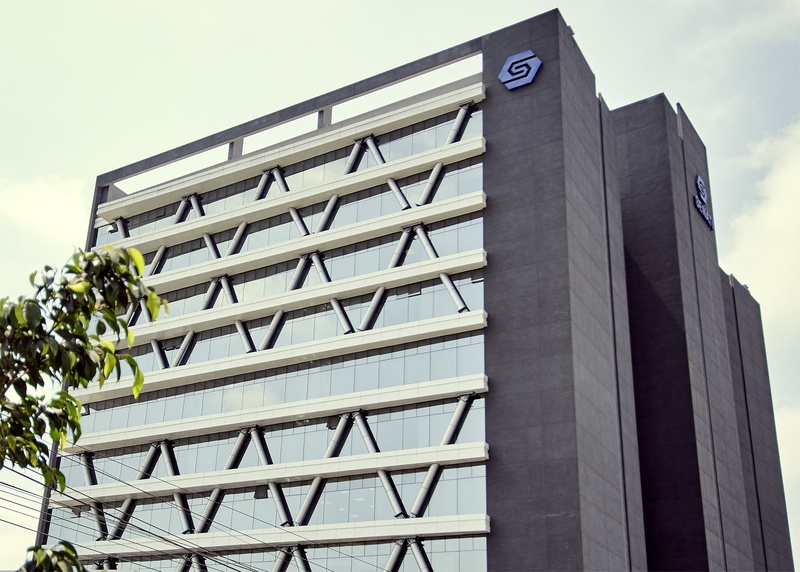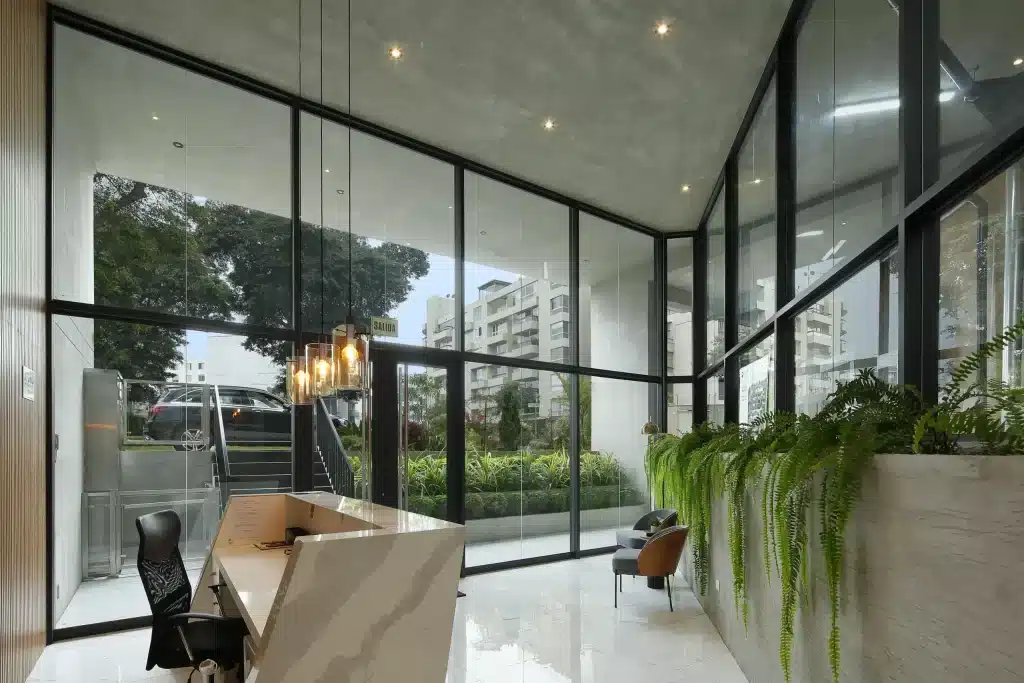


Discover how Low-E glass is revolutionizing energy savings and comfort in sustainable buildings
-
What is Low-E glass and why is it key in modern construction?
El Low-E glass (low-emissivity) is a type of glass with a special metallic oxide coating that reduces thermal transfer without affecting natural light transmission.
This means it helps retain heat indoors in winter and reflects it in summer, improving energy efficiency in homes and commercial buildings.
This type of glass is ideal for warm and temperate climates because it minimizes heat gain without blocking light, reducing the use of air conditioning and artificial lighting.
-
Benefits of Low-E glass in sustainable buildings
- Greater energy efficiency: Reduces heat transfer, decreasing the need for heating in winter and air conditioning in summer.
- Better use of natural light: Allows daylight to enter without causing overheating.
- Lower carbon footprint: Reduces energy consumption in buildings, contributing to sustainability.
- Versatility in applications: Suitable for windows, facades, and combinations with other types of glass to enhance performance.
-
Low-E glass and insulated glass: The best combination for superior efficiency
While Low-E glass is an excellent choice for thermal control, its performance can be further enhanced when incorporated into insulated glass units.
This combination optimizes thermal and acoustic insulation, creating more efficient and comfortable spaces.
To learn more about insulated glass and its benefits, visit our blog:
👉 Insulated glass: Thermal and acoustic insulation for sustainable buildings
#VidrioLowE #Sostenibilidad #ConstrucciónEficiente #ControlSolar #EficienciaEnergética #ConstrucciónSostenible #HPDGlassgroup